Basements and lower-level walls
Moisture can come through foundation walls, from stored items blocking airflow, or from dehumidifiers that are undersized or not draining correctly.
Serving Decatur, Georgia & surrounding areas
Mon–Fri 8am–6pm · Sat 9am–2pm
Mold remediation in Decatur, Georgia
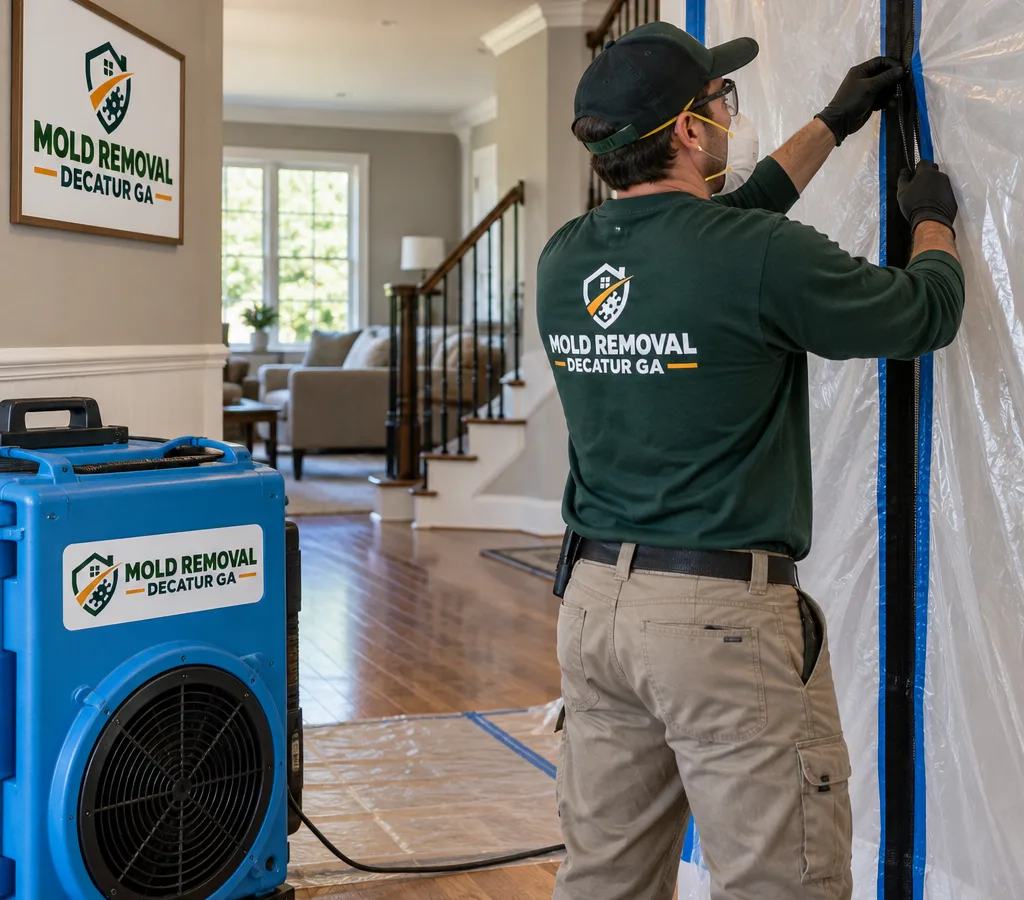
Containment first, removal done safely, and a clear plan to get your home or business back to normal with minimal disruption.
Source control comes first
When you need mold remediation in Decatur, GA, speed matters, but the order of operations matters more. Mold spreads when it is disturbed, so the first goal is to control air movement and isolate the work area. Then we remove impacted materials that cannot be cleaned, clean and detail remaining surfaces, and dry the structure so the conditions that allowed mold are corrected.
Mold issues around Decatur often trace back to everyday moisture events: slow plumbing leaks under sinks, shower or tub leaks that stay hidden behind tile, HVAC condensation problems, or water intrusion after heavy rain. In older housing stock near downtown Decatur and neighborhoods with a mix of basements and crawl spaces, moisture can build up quietly until odor or staining makes it obvious.
Mold Removal Decatur GA is a professional mold company in Decatur, GA focused on practical remediation: clear scope, careful containment, and documentation you can use for property managers, landlords, or an insurance conversation if needed.
Inspection and containment standards
A proper remediation job is more than spraying a chemical and painting over discoloration. For mold remediation Decatur GA projects, we typically include:
Moisture assessment: We look for the active source—leak, condensation, drainage, or humidity—because removal without fixing moisture leads to recurrence.
Containment and negative air: Plastic barriers, sealed returns when needed, and HEPA air filtration help keep spores from moving into clean areas.
Safe removal: Selective demolition of unsalvageable drywall, insulation, carpet pad, or baseboards, with bagging and controlled transport.
HEPA vacuuming and detailed cleaning: A top-to-bottom clean of framing, sheathing, and remaining surfaces within the work zone.
Drying and humidity control: Dehumidification and airflow management aimed at returning materials to normal moisture conditions.
Clear wrap-up: Photos and a written summary of what was removed, cleaned, and dried, plus practical prevention notes.
If your situation involves a water event as well as mold growth, the first steps often overlap with water damage restoration because drying and moisture control drive the outcome. We keep the plan simple: stop moisture, contain, remove, clean, and verify conditions before rebuild.
Book Your Free Inspection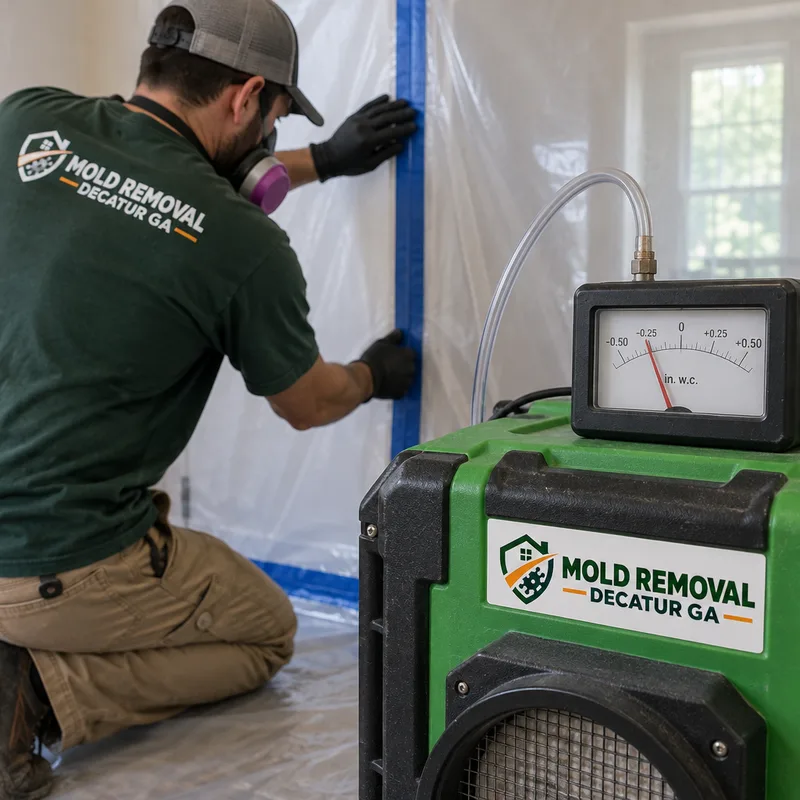
Decatur property warning signs
Moisture can come through foundation walls, from stored items blocking airflow, or from dehumidifiers that are undersized or not draining correctly.
Ground moisture and poor ventilation can lead to growth on joists and subflooring, especially when ductwork sweats or there are plumbing drips.
Failing grout, caulk, or waterproofing can let moisture sit in wall cavities, where mold grows long before it is visible.
Small roof leaks and bathroom fans venting into attics can keep sheathing damp and create recurring growth.
Condensation and restricted airflow can create damp surfaces, especially near coils, drain pans, or uninsulated lines.
A controlled sequence
We identify visible growth, odor sources, and likely moisture pathways, then define what gets removed versus cleaned. If testing is already available, we align the scope to it; if not, we focus on conditions and materials.
We isolate the work area with plastic barriers and run HEPA filtration to control airborne spread. This is especially important when work is near living areas, offices, or shared hallways.
Materials that cannot be reliably cleaned—often drywall, insulation, and carpet pad—are removed in a controlled manner and bagged out of the area.
We HEPA vacuum and clean remaining structural surfaces, focusing on corners, fasteners, and rough framing where debris can hold spores.
We dry the area and address the moisture driver when possible. If a separate trade is needed, we document what needs to change.
We confirm the space is clean and dry for the next step, provide photos and a written summary, and explain practical prevention steps for the specific location.
Pricing depends on onsite conditions
Mold remediation in Decatur typically ranges from about $1,000 to $6,000+ depending on how far the growth spread and what materials must be removed. A small, contained area—like a limited section of drywall—is often on the lower end, while crawl spaces, multiple rooms, or projects needing selective demolition and extended drying trend higher.
Final pricing is driven by square footage, containment complexity, access such as an attic or crawl space, how wet the materials are, and whether finishes must be removed to reach the source. The exact cost is confirmed after an on-site inspection and written scope.
“They walked us through what had to come out, what could be cleaned, and why containment mattered. The crew kept dust and odor out of the rest of the house, and the report afterward made it easy to plan repairs.”
“We manage a small rental and needed a straightforward timeline. The remediation was scheduled quickly, and the documentation was clear enough to share with our tenant and the repair contractor.”
Answers before work begins
Most mold remediation projects take 1 to 3 days on site, with larger crawl space or multi-room jobs taking longer when drying time is needed. The timeline depends on how wet materials are and whether selective demolition is required to reach hidden growth behind walls, under flooring, or in insulation.
Often you can stay home if the affected area can be fully contained and has a separate path of access, but it depends on location and sensitivity, including children, asthma, or immune concerns. When mold is in a main living area, kitchen, or shared hallway, temporary relocation for part of the work can be the safer and more comfortable option.
Testing is not required for every job, but it can help when the source is unclear, when you need documentation for a third party, or when symptoms persist without visible growth. If you already have lab results, we use them to focus the remediation scope; if you want post-work confirmation, that can be arranged as part of the closeout plan.
Mold returns when moisture returns, so the usual causes are unfixed leaks, condensation from HVAC or ductwork, poor bathroom ventilation, or high humidity in basements and crawl spaces. Removal and cleaning are only half of the solution; the conditions that kept materials damp must be corrected for lasting results.
Yes, remediation can be performed without full encapsulation, but the crawl space still needs a moisture control plan. Depending on conditions, that might mean repairing plumbing drips, improving drainage, adding a properly sized dehumidifier, sealing specific air leaks, or updating vapor barrier coverage.
Coverage depends on the policy and the cause of loss, not just the presence of mold. Mold related to a sudden, documented water event may be treated differently than long-term seepage or maintenance issues; we provide a clear scope, photos, and moisture findings so you have solid documentation for your claim conversation.
Tell us what you are seeing or smelling and where it is showing up. We will schedule an on-site inspection in Decatur, explain the containment and removal approach, and provide a written scope with straightforward pricing.