Mold Remediation
A full remediation approach when there is broader contamination, recurring growth, or hidden spread. Includes containment, controlled removal, cleaning, and steps to help prevent return once the moisture source is addressed.
Serving Decatur, Georgia & surrounding areas
Mon–Fri 8am–6pm · Sat 9am–2pm
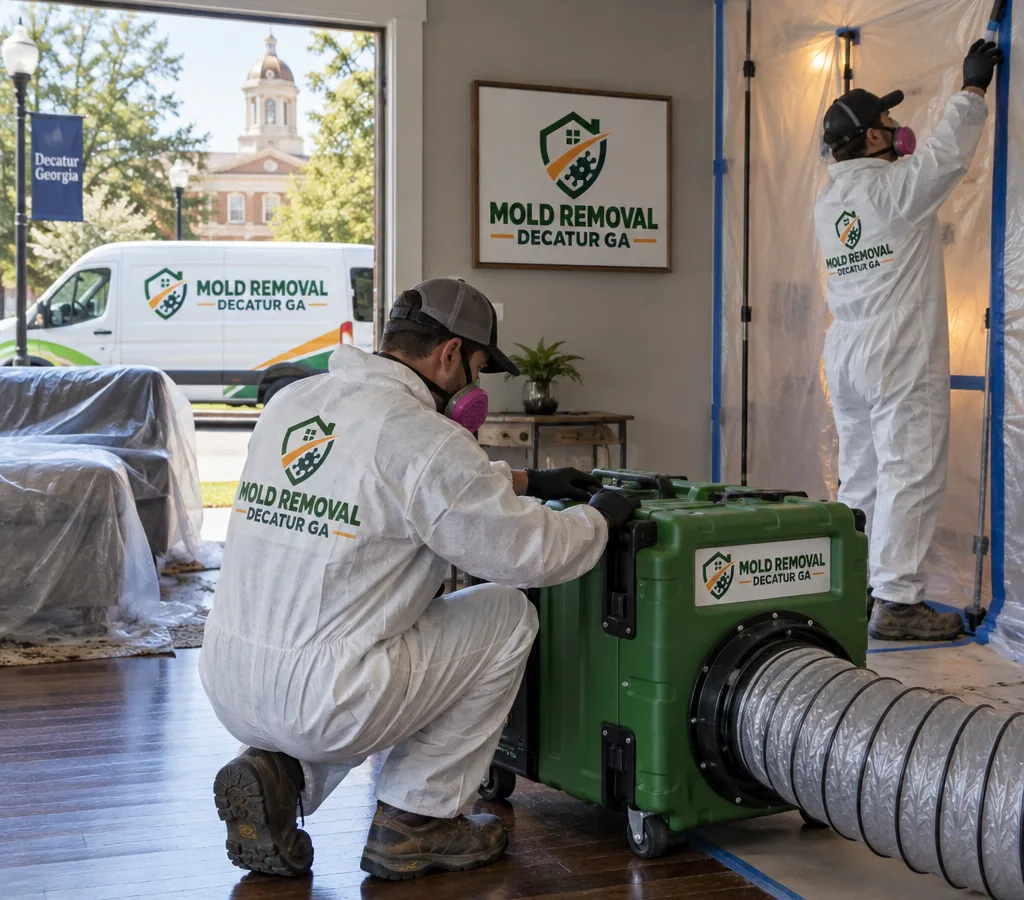
Mold cleanup in Decatur, Georgia
Get the affected space safely contained, cleaned, and ready to move forward. If you smell musty odors or see staining, our team responds with careful containment, safe cleanup, and a clear plan.
Inspect before disturbing
Mold problems rarely stay in one spot. What looks like a small patch on a wall can trace back to a slow plumbing leak, a roof issue, or trapped humidity in a closet, crawl space, or basement. For mold removal Decatur projects, the goal is to remove affected materials the right way, keep spores from spreading to clean areas, and address what allowed growth in the first place.
Mold Removal Decatur GA starts with a straightforward inspection and a written scope. We identify the impacted areas, set up containment, and use air filtration during the work. Then we remove and clean affected materials, treat remaining surfaces as appropriate, and leave the area ready for the next step—drying, repairs, or rebuild—based on what we find. You get clear communication throughout so you understand what is being done, what is being removed, and what needs to happen next.
Book Your Free Inspection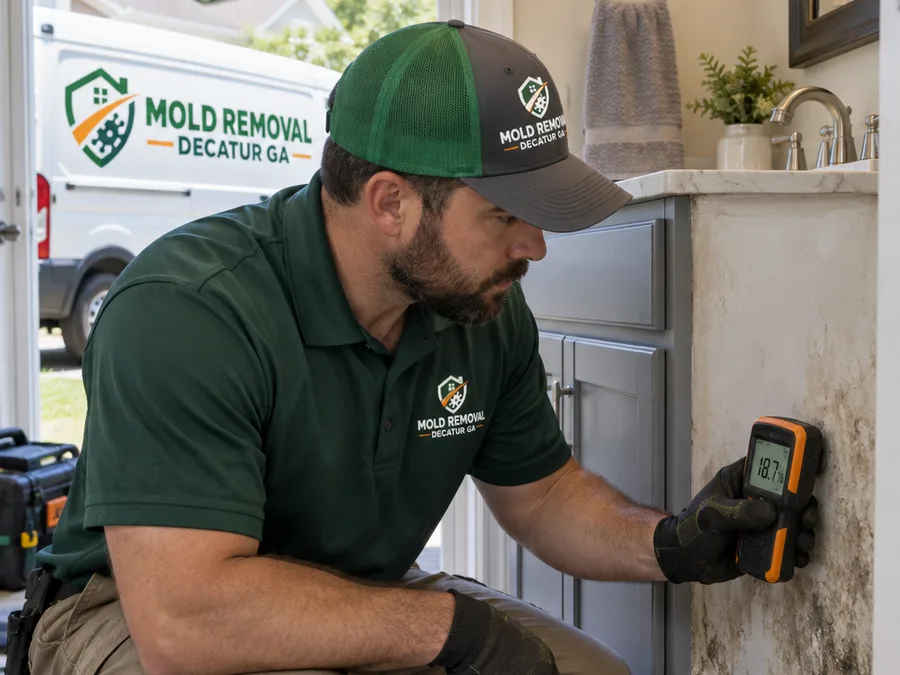
Related service
Broader or recurring contamination may require a complete remediation plan.
A full remediation approach when there is broader contamination, recurring growth, or hidden spread. Includes containment, controlled removal, cleaning, and steps to help prevent return once the moisture source is addressed.
Controlled from start to finish
We isolate the work area with plastic barriers and controlled airflow so disturbed spores stay in the contained zone. This matters when work is near living areas, bedrooms, HVAC returns, or shared hallways in small buildings.
Removal without fixing moisture leads to repeat problems. We look for common sources like supply line leaks, tub or shower seepage, roof and flashing issues, and damp crawl spaces, then explain what must be corrected.
When drywall, baseboards, insulation, or flooring needs removal, we do it in a controlled way to limit dust and cross-contamination. Cleanup includes detailed wipe-downs and HEPA vacuuming of the contained area.
You receive a plain-language scope of work that matches the conditions we see onsite. For property managers or real estate timelines, we can document affected areas, what was removed, and the condition at completion.
Musty smells often linger when porous materials stay damp or microbial growth remains in hidden cavities. We focus on removal, drying, and cleaning rather than masking odors, so the improvement is tied to real conditions.
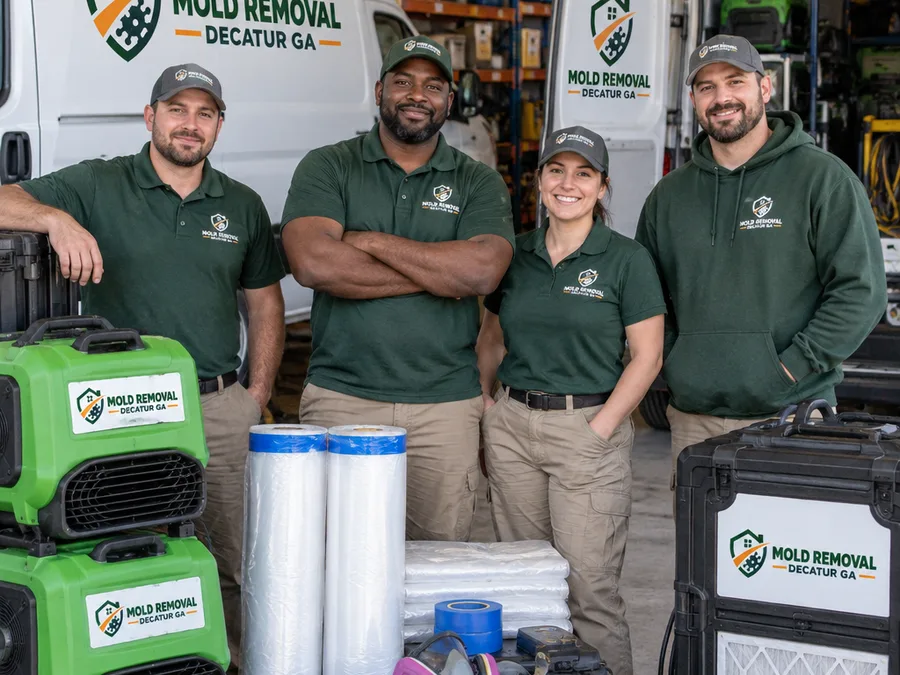
Local field team
Mold Removal Decatur GA provides mold removal services for properties in Decatur, Georgia.
Our work is built around safe work practices and clear communication. We explain what we are seeing, what the next step is, and how we plan to keep the rest of the building clean while the removal is underway. If the situation points to an underlying moisture issue, we will tell you plainly so you can address it before you invest in repairs or new finishes.
Whether you are dealing with a small area after a leak or a larger issue discovered during a sale or renovation, we focus on practical next steps: isolate, remove, clean, dry, and confirm the space is ready to move forward.
Book Your Free InspectionPricing depends on onsite conditions
Mold removal in Decatur typically ranges from about $800 to $3,500 for many residential jobs, depending on what is affected. A small, contained area with limited material removal is often closer to $800 to $1,500, while larger multi-room work or crawl space involvement can run $2,000 to $6,000+.
Final cost changes with the size of the impacted area, how much demo is required, access such as an attic or crawl space, the amount of containment needed, and drying needs after the moisture source is fixed. The exact price is confirmed after an onsite inspection and written scope.
A controlled sequence
We evaluate visible growth, moisture conditions, and likely spread behind surfaces. You get a clear scope that outlines affected areas, containment approach, and what materials may need removal.
We isolate the work zone and run HEPA air filtration to reduce airborne particles during demolition and cleaning. This helps prevent tracking dust and spores into clean rooms.
We remove unsalvageable porous materials and clean remaining structural surfaces. We finish with detailed HEPA vacuuming and wipe-downs within the contained area.
If drying is needed, we outline what must happen before closing up walls or reinstalling finishes. We also explain what repairs or corrections reduce the chance of mold returning.
If you suspect hidden growth after a leak, get an inspection and written plan before you repaint, replace flooring, or close up a wall.
Book Your Free InspectionDecatur-area property context
We provide mold removal across Decatur and nearby areas where older homes, crawl spaces, and humidity can make moisture issues harder to spot early.
Older homes and mixed-use buildings often have past renovations and layered materials, so we pay close attention to hidden cavities around kitchens, baths, and utility chases where moisture can linger.
Many houses have crawl spaces and mature tree cover that can keep areas damp after rain. We often find issues tied to subfloor moisture, plumbing penetrations, and past repairs.
With a mix of older construction and additions, we look carefully at roof transitions, flashing, and bathroom upgrades where slow leaks can feed mold behind tile and drywall.
Larger homes and newer remodels can still develop problems around HVAC condensate lines, laundry rooms, and attached garages. Containment planning matters when work is near open living areas.
Older housing stock and older plumbing can mean pinhole leaks or slow seepage behind cabinets. We focus on controlled removal so surrounding finishes and adjacent rooms stay clean.
“They explained what was happening behind the wall, set up containment before any demo, and kept the rest of the house clean. The scope was clear and the work moved forward without confusion.”
“We had a musty smell that kept coming back. The inspection pointed to a moisture issue we had missed, and the cleanup plan made sense. The odor improved once the wet materials were removed.”
“As a property manager, I needed documentation and a straightforward schedule. Communication was consistent and the affected unit was ready for repairs when they finished.”
Answers before work begins
Scheduling depends on current demand, but urgent situations like active leaks or strong odor are prioritized when possible. Once we see the site, we can outline the scope, containment needs, and a realistic timeline.
Yes, when those materials are affected we determine what can be cleaned and what must be removed. Porous materials like insulation and heavily impacted drywall are often removed, while framing may be cleaned after proper containment.
It should not when the job is set up correctly. We use containment barriers and HEPA air filtration during removal so disturbed particles stay in the controlled area and cleanup is completed before the space is opened back up.
Yes, crawl spaces are a common place for moisture to collect and growth to develop on subflooring and framing. Access, ventilation conditions, and vapor barrier condition all affect how the work is planned and priced.
We focus this visit on the removal scope and leaving the area ready for the next trade or repair phase. If repairs are needed, we will explain what must be replaced and what conditions must be met before rebuilding.
Leave the affected area as-is and avoid disturbing visible growth, since cleaning or scraping can spread particles. If it is safe, stop the moisture source and keep pets and children away from the area until we assess it.
Tell us what you are seeing and where it is showing up. We will schedule an inspection, explain the scope in plain language, and outline the safest way to remove affected materials and control odor.